
Learning MINIMALIST Cold-Soaked STOVELESS Camping Meals from a Thru Hiker!
- Randy Reek, The Great Out There

- Aug 1, 2025
- 12 min read
Updated: Sep 11, 2025
The K.I.S.S. principle applies to meals for adventure travel of all sorts Keep It Super Simple!
“Jupiter Hikes” is a YouTube contributor who is a veteran thru hiker with more than 18,000 miles of experience. This includes the Appalachian Trail, Pacific Crest Trail, Arizona Trail, Great Divide Trail, and many more. He uses his YouTube channel to review gear, conveys tips based on his experience – including meals for long distance hikes.
I am featuring his video that covers everything you could ask about cold soaked stoveless backpacking meals.
In this transcript I have added a few comments that apply to other forms of backcountry travel, including canoeing/kayaking, bikepacking, and adventure motorcycling.
To start, my entire “cook kit” consists of an empty plastic peanut butter jar and a plastic spoon. That’s it!
For backcountry camping meals, I plan recipes which are stoveless. With cold soaked meals, I don’t carry a cooking stove! That also means that I don’t carry an expensive titanium pot – or pots! No stove means no fuel cannister and no wind screen to protect the stove.
Think of the BULK that you eliminate with no cook kit, no stove or fuel! Think of the weight that you save!
Now, I admit that there are times when I pack a stove for cooked meals when camping. But on a thru-hike (canoe trip, bike or motorcycle travel), the cooking stove is always frustrating. Did I bring enough fuel? Should I pack a second cannister? Should I buy one before I run out? If using liquid fuel, do I have enough? Did it leak all over my gear? Where will I get more fuel?
With cold soaked stoveless meals, there are no stupid games or worries. ALL you have and all you need for stoveless camping meals is one jar! (And you don’t even need to BUY it – MANY campers simply recycle an empty peanut butter jar!)
Another big reason I prefer cold soaked stoveless meals is because preparation is more time efficient.
ALL you do is add your dry ingredients to the jar, cover with cold water, give it a shake, and wait for the meal to prepare itself!
This is more efficient because while my meal is “cooking” for 5, 30, or 60 minutes I keep hiking. I might hike another mile or maybe two or five miles! (When paddling, pedaling, or motorcycle riding that might mean another 5, 10, or 50 miles per day!)

When your meals require cooking, you first set up the stove (fill with fuel or assemble the stove kit). Now you either boil water and rehydrate the meal or prepare the parts of the menu. In the same amount of time, I am now five miles up the trail and eating my meal which has been cooking in my backpack as I walked.
(Some travelers cook a hot breakfast and supper. Multiply from 30 to 60 minutes per meal TWICE a day, then subtract the actual travel time and mileage, day after day).
Stoveless cold soaked meals save space, weight, and time – but this menu also has its downsides.
Cold soaked stoveless meals are a favorite of weight-conscious travelers – especially self-propelled thru hikers. (This also applies to other travelers looking to maximize their time MOVING versus time in camp). But cold soaking is not for everyone.
One of the big downsides is that because cold soaking is more efficient, if you are hiking and camping with friends then meal prep is not going to be a very fun or social experience. While everyone else is cooking their meal and hanging out, your meal already cooked 30 minutes ago. You've already eaten it - and now you're just sitting there doing nothing. (Maybe you can gather firewood for a cozy fire?)

So cold soaking might not be great unless everyone in the group is following a similar plan.
(Every disadvantage turns into an advantage when you reach camp and don’t need to spend time preparing a meal. You’re tired, it’s blowing and raining, etc. Likewise, in the morning you are packed and on the trail faster).
The other downside is menu planning. I have tons of recipes and tons of options for meals. But when you include cooked meals, the options are truly endless. If you want to carry the ingredients, you can cook just about anything that you would prepare at home.
But that is the purpose of this video. I want to show you how to add variety to your cold soaked stoveless backpacking meals.
There is one other downside and that is some people insist on having a warm meal. Of course, this may be a necessity in cold weather.
Cold soaking might not fit in with other cooked meals. While it is possible to plan some cold soaked meals and other cooked meals, carrying a stove and cook kit negates the main benefits of a totally stoveless menu plan. You really need to go “all in” on cold soaking. The exception is that you might want to mix in some cold soaked stoveless meals on extended canoe trips or even when overlanding by 4x4 or ADV motorcycle specifically to save weight, bulk, and meal prep time.
Cold soaking is the favorite of thru hikers versus weekend campers. Weekend campers can carry fresh food in coolers or complete frozen meals! (But anyone covering long miles, especially if you are carrying or moving the weight like cyclists or on canoe portages, will benefit from smaller and lighter packs. Even adventure motorcyclists will enjoy better riding performance with a lighter load).
The MAIN Secret of Cold Soaking TASTY stoveless meals.
To enjoy cold soaked stoveless meals, the most important concept is to never soak just couscous (or Ramen or Knorr rice sides).
I am ALWAYS going to add raisins or I'm going to add tuna or I'm going to add sundried tomatoes and/or sunflower seeds. When it comes to cold soaking, never soak and eat ramen or just couscous or just beans. Always ask yourself: What can I add to this? What would make this main ingredient better, more flavorful, and different than the last time I made it?
Let's review some sample recipes. All of the ingredients are found at your grocery store at home (or most convenience stores along the route). These bases and ingredients are readily available everywhere and very inexpensive.
The first meal is Beans & Rice. This is the meal I rely on more than any other. It is super, super cheap. It is also very hearty and easy to make with lots of possible variations.
I start with about 3 to 4 ounces of instant (dehydrated) refried beans (or dry bean soup mix). Then I add about an ounce of instant Minute Rice. These dry ingredients cold soak really well and rehydrate in as little as 30 minutes. NOTE: Be SURE to use "instant rice" since standard hard rice may never soften in cool water!
To the beans and rice, I will add a little bit of taco seasoning or fajita seasoning or chili seasoning - whatever your favorite. (This is unnecessary with flavored bean soup or chili mixes). Now simply cover with water and give the jar a shake.

But don’t stop there. When ready to eat, I add about an ounce of olive oil. Olive oil adds flavor but also important calories. Next, I crush some Fritos (or Doritos) for more flavor and some crunch. If you like, you can also add more heat with a small bottle of hot sauce.
With beans and rice (and many other meals) you can supplement with a few slices of hard cheese. For life on the trail without refrigeration, the harder the cheese the better. Most hard cheeses (especially wrapped in wax) will last at least two or three days.
Likewise, you can add fresh ingredients after passing through a town. For example, pick up an avocado for supper that evening.
The next popular base is couscous. At first, I didn’t think cold soaked stoveless meals were for me. It was couscous that changed my mind.
As mentioned earlier, even flavored couscous by itself is bland. But when you combine ingredients, it becomes wonderful. My favorite couscous flavor is the toasted pine nut. Soak for about 10 minutes and it's ready to eat.
Then I make it better by adding raisins to give it a different texture. I also add different kinds of nuts and sunflower kernels. You can also add tuna or chicken packets. Sundried tomatoes make it tastier, and these combinations make couscous second on my list of favorite easy cold soaked stoveless meals.
The “Ramen Bomb” is a staple in the thru hiking world. This is made with one packet of Ramen noodles (with or without the included flavor packet) and half a packet of instant mashed potatoes.
Both the Ramen and potatoes are available in multiple flavors, so everyone can find a combination they enjoy. Neither of these cold foods is especially satisfying by itself. But there's something about combining the two that actually makes it really good. I ate this combination nearly every day on the 750-mile Great Divide Trail.
After rehydration, the easiest thing to add is some hot sauce. Next, add a little fresh cheese that you packed out. (Of course, you can start with cheesy flavored potatoes). A great addition is shelf-stable bacon bits – which can be added to most any cold soaked stoveless meal (or chopped up jerky, onion crisps, or cans or packets of chicken or tuna).
I eat oatmeal for breakfast almost every day. You can cold soak instant oatmeal packets (or you can prepare “overnight oats” by cold soaking regular rolled oats – see the related article.)

Instant oatmeal is available in many flavors. You can add raisins, dried “Craisins” cranberries, or chopped nuts. You can mix in flavored, powdered instant breakfast packets (or powdered milk) that dissolves in cold water. Some people add instant coffee, powdered peanut butter or hot chocolate packets. There are enough combinations to try something different every day.
Hiker Trash Pizza is a meal that I enjoyed on the Pacific Crest Trail. You make this with any kind of bread, tortillas, pita or flatbread or naan. Spread some cream cheese on top, then add some pepperoni. If you have any fresh ingredients, you can add peppers or onions or avocado. (Groceries may also have pizza sauce in squeeze tubes).
A PB&B Wrap is similar. Simply spread peanut butter on top of those tortillas, then add some banana slices. (Or you can add jam from packets or a small non-glass container that you packed from home. Some groceries may have jam and jelly in squeeze tubes). For added calories, you can add honey or chocolate chips (dark chocolate is harder and might last longer in warm weather).

For a taste treat, ADD Real Food to your cold soaked meals
A recipe is only a combination of food ingredients. Whenever possible, I recommend packing out real food from town for variety.
“Town food” could be a convenience store frozen burrito. I pack these out all the time! The frozen burrito lives in the outside of my pack until lunch or supper time. The same is true if you pass a Subway or a grocery store that sells prepackaged sandwiches. This is all real food – not just Snickers or granola bars.
The opposite is also possible. You can pack out hot food. I carry a gallon Ziploc bag and can pack a large pizza. This is going to be awesome a few miles down the trail! (Many grocery and convenience stores have to-go hot foods including burgers, breakfast biscuits, and other varieties of sandwiches that make great meals hours later when they cool down!)
(If you are traveling with a friend, picking up fresh food is easier since you can ensure that nothing will go to waste or spoil due to lack of refrigeration).
Also, don’t overlook restaurant leftovers. Use your little jar to pack out an extra meal from the Chinese restaurant in town. (Many grocery and convenience stores have a deli section that serves hot soups and chili that you can transfer to your jar for later).
Packing leftovers also applies to foods that you carry from home. Consider buying a food dehydrator to prepackage leftovers (Ziploc or vacuum bags) for the trail.
(Your cold soaked stoveless meals do not have to be prepared from dry ingredients. If you plan ahead and prepare extra meal servings, these can be dried and sealed for later. Dehydration removes the water content. Cold soaking adds the water back in. But beware than it is impossible to fully dehydrate fatty foods like hamburger and cheese – so after drying, it is best to store these dried meals in the freezer).
Finally, there are a few companies that now prepackage meals for cold soaking. One of these brands is PackIt Gourmet.
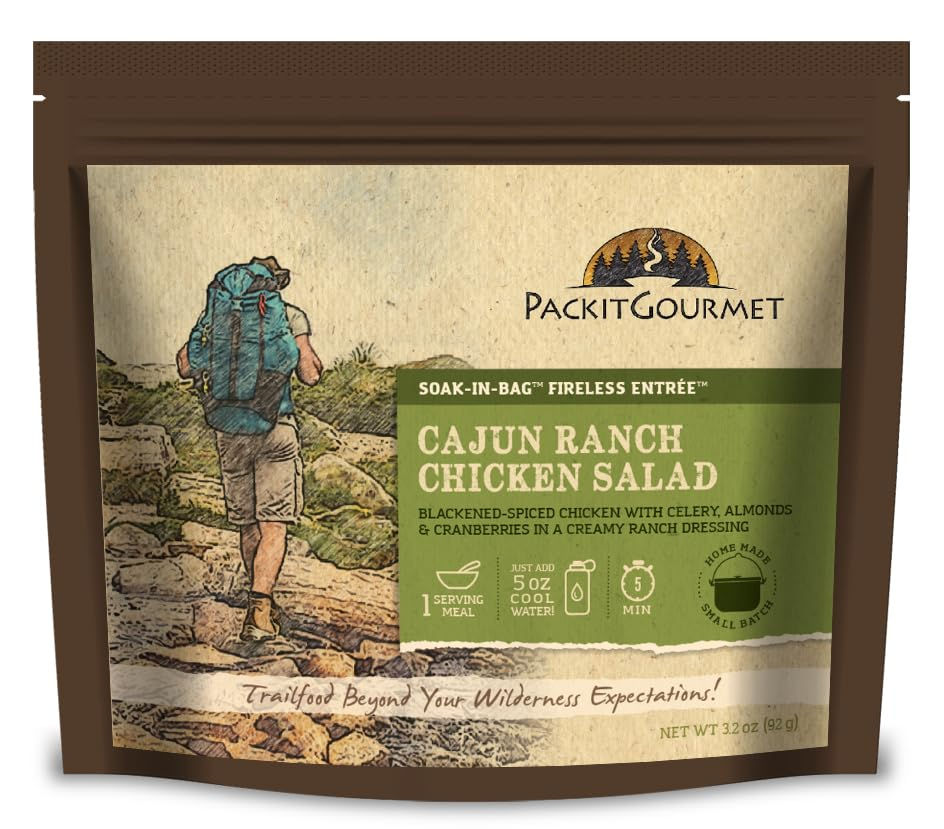
These meals require only the addition of cool water. They offer about 15 different meal packets. If you don’t like the idea of carrying a variety of ingredients, these prepared meals are another cold-soaking alternative. You don’t even need to carry a peanut butter jar because you can add water to the foil pouch.
ALSO NOTE: Mountain House also has full MEALS that you can cold soak! A favorite is freeze-dried Beef Stew with carrots, peas, and potatoes.

Freeze-dried meat and vegetables have ONLY the water removed, so the meal retains the flavor and texture of the cooked ingredients. While intended for use at home or in camp by adding boiling water, the instructions also state: All you need is hot water and a 10 minutes to prepare. Utility outage or no access to hot water? No problem. Our meals are pre-cooked and can be prepared with cold or room temperature water, just double the re-hydration time. Incidentally, Mountain House offers bulk cans of their most popular meals - which contain 10 servings at a 50% discount over the individual meal packets! Click HERE for more information.

That is a summary of my favorite stoveless recipes. These are the cold soaked staples that I have relied on for nearly a decade.
In conclusion, stoveless cold-soaked meals are most beneficial for thru hikers, but it can be great for others as well! You don't have to be thru hiking the Pacific Crest Trail just to see the benefits:
My complete kitchen weighs less. My little peanut butter jar is only 1oz while fuel and stoves can weigh more than a pound! Dried foods weigh little and pack tightly. Meal prep is easier, faster and more efficient. You will cover more miles per day.
My meals are cheaper, and cold soaked stoveless meals are super budget friendly! No need for a fancy stove, no need to replace your fuel every week. Save the money and go stoveless!
I want to thank Jupiter Hikes for his insights and experience!
Cold soaking is the minimalist, highly efficient, lightest weight, and lowest cost solution to meals for backcountry campers. Cold soaking may not be the choice of more leisurely travelers. But some adventurers have incorporated cold soaked meals into their menus at home and at work.
Finally, cold soaking can be the “back up” for some forms of travel. Except for true wilderness travel without ANY resupply options – like extended backpacking or canoe trips – most thru hikers, bikepackers, and adventure motorcyclists visit towns regularly. It is entirely possible to PLAN to eat every meal in town.
I have bikepacked for weeks without preparing a SINGLE meal in camp! I only carried a few snacks to carry me over to the next town. Likewise, many motorcycle tours rely on restaurant meals and motels. But when the route crosses into the backcountry, and when the route requires camping along the trail, many breakfasts and dinners can be planned for camp.

For adventure motorcycle travel, I know that I will wake up miles away from town. “Overnight Oats” is a simple but hearty breakfast (see the related article). It is ready to eat, and I get on the road quickly. I also know that I will be refueling before lunch, and I often make this the main meal of the day. Then I either have a lighter meal when refueling later in the day, grab some food to go, or start cold soaking my evening meal so it is ready when I find the perfect campsite.
Often, the best scenery and the main destinations are far removed from civilization! This is when cold soaked meals can bridge the access to restaurant meals or to-go foods from town.
Another benefit in bear country is that you can enjoy your evening cold soaked meal in camp without calling in hungry bears from five miles downwind! I cringe every time I watch a video of city folk who insist on frying bacon or grilling steaks to enhance their wilderness camping experience. I have INTENTIONATELY burned grease and honey as a long-range lure when bear hunting in the deep Northern forest!
In contrast, the dry ingredients for cold soaked meals have little to no scent in sealed packages. Still, I keep ALL my food in a stuff sack that I hang downwind of camp and have never had a bear problem.
Please leave your comments below. What are your favorite NO COOK meals? What stoveless meals do you enjoy at home AND on the trail?
Please share this article with your friends. Please also follow the GreatOutThere.online blog by subscribing and follow along on Facebook, Instagram, YouTube, and Pinterest for more related content.


Comments